
• Feng Liu (刘锋), Ph. D.

    Associate Professor 副教授

    Business School, Shandong University, Weihai, China.

    Principal Investigator (PI) of Star-lights Research Team (星耀科研小组)

    Associate Editor of Innovation: Organization & Management (SSCI)

    Editorial Board: Small Business Economics (SSCI), Humanities & Social Sciences Communications (SSCI), Information Resources Management Journal (EI), International Journal of Multinational Corporation Strategy, Journal of Smart Tourism

    Email address: liufeng@sdu.edu.cn

    September 2023 - Now: Associate Professor at the Business School, Shandong University, Weihai.

    March 2020 - August 2023: Assistant Professor at the Business School, Shandong University, Weihai.

    March 2017 - February 2020: PhD in Business (Major in Logistics, Service & Operations Management), Korea University Business School.

  • 与合作者携手并进,与学术圈同频共振,与国家共绘繁荣。

    Advancing in partnership with our collaborators, growing in dialogue with the academic community, and helping shape a prosperous future for our nation.

    Section image

    Personal profile

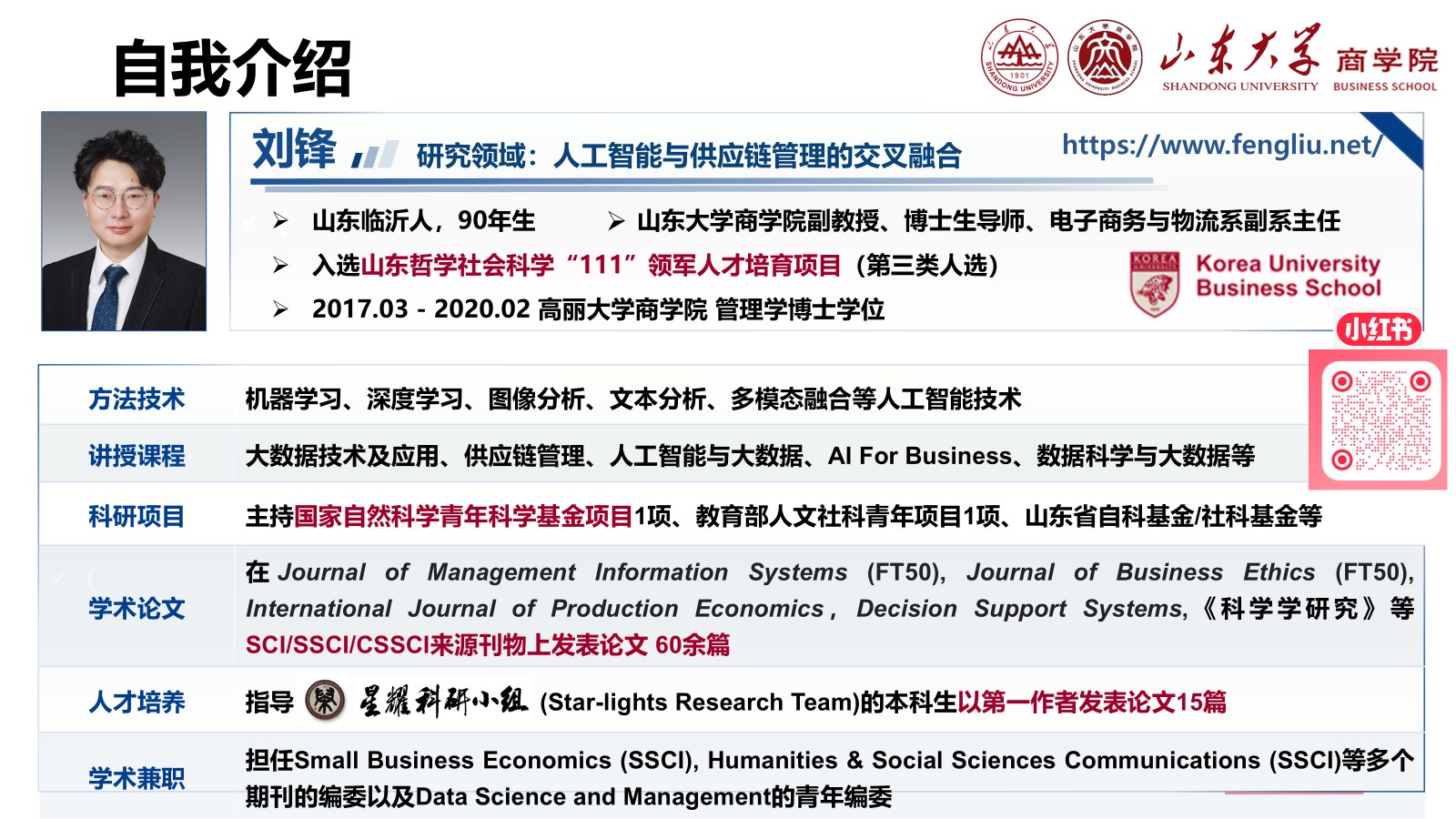
    刘锋博士(个人主页:https://www.fengliu.net/),山东临沂人,现任山东大学商学院副教授、博士生导师、电子商务与物流系副系主任,入选山东哲学社会科学“111”领军人才培育项目(第三类人选)、山东大学(威海)青年学者未来计划。2020年毕业于韩国高丽大学商学院,获管理学博士学位。主要从事“AI × 管理”交叉融合研究,关注人工智能如何赋能管理研究、改善企业决策,重塑组织运营与商业活动,解决经济、管理与社会相关议题。综合运用机器学习、深度学习、图像与文本分析、多模态数据融合等方法,形成三个相互关联的研究方向:一是人工智能驱动的管理研究与决策支持,围绕复杂管理问题开展预测、识别与解释,探索理论引导与数据驱动相结合的研究范式;二是数智化运营与供应链管理,重点研究供应链集中度、供应链透明度及数字化转型,探索数智技术改善运营效率与供应链绩效的作用机制;三是生成式人工智能与社交媒体管理,关注人工智能生成内容、社交机器人及其对用户行为、企业管理和数字治理的影响。相关研究致力于推动人工智能方法创新与管理理论发展相结合,为数智时代的企业高质量发展与社会治理提供理论参考。
    已在 Journal of Management Information Systems、Journal of Business Ethics、International Journal of Production Economics、Decision Support Systems、Technological Forecasting and Social Change、Annals of Operations Research、China Economic Review、Expert Systems with Applications 及《科学学研究》等期刊发表论文50余篇,其中FT50期刊论文2篇、ABS三星级期刊论文9篇,ESI高被引论文3篇,谷歌学术引用3700余次。荣获 Managerial and Decision Economics 期刊“Top Viewed Article”奖,相关成果获山东省第三十七届社会科学优秀成果奖三等奖。担任Innovation: Organization & Management (SSCI)期刊的副主编(Associate Editor), Small Business Economics、Humanities & Social Sciences Communications、Information Resources Management Journal 等期刊编委。主持国家自然科学基金青年项目、教育部人文社会科学青年项目、山东省自然科学基金面上项目、山东省社会科学规划研究项目各1项,以及“AI For Business”研究生人工智能示范课程校级重点项目。围绕国家数字经济与人工智能发展战略需求,推进“AI × 管理”的科研创新、课程建设与人才培养协同发展。
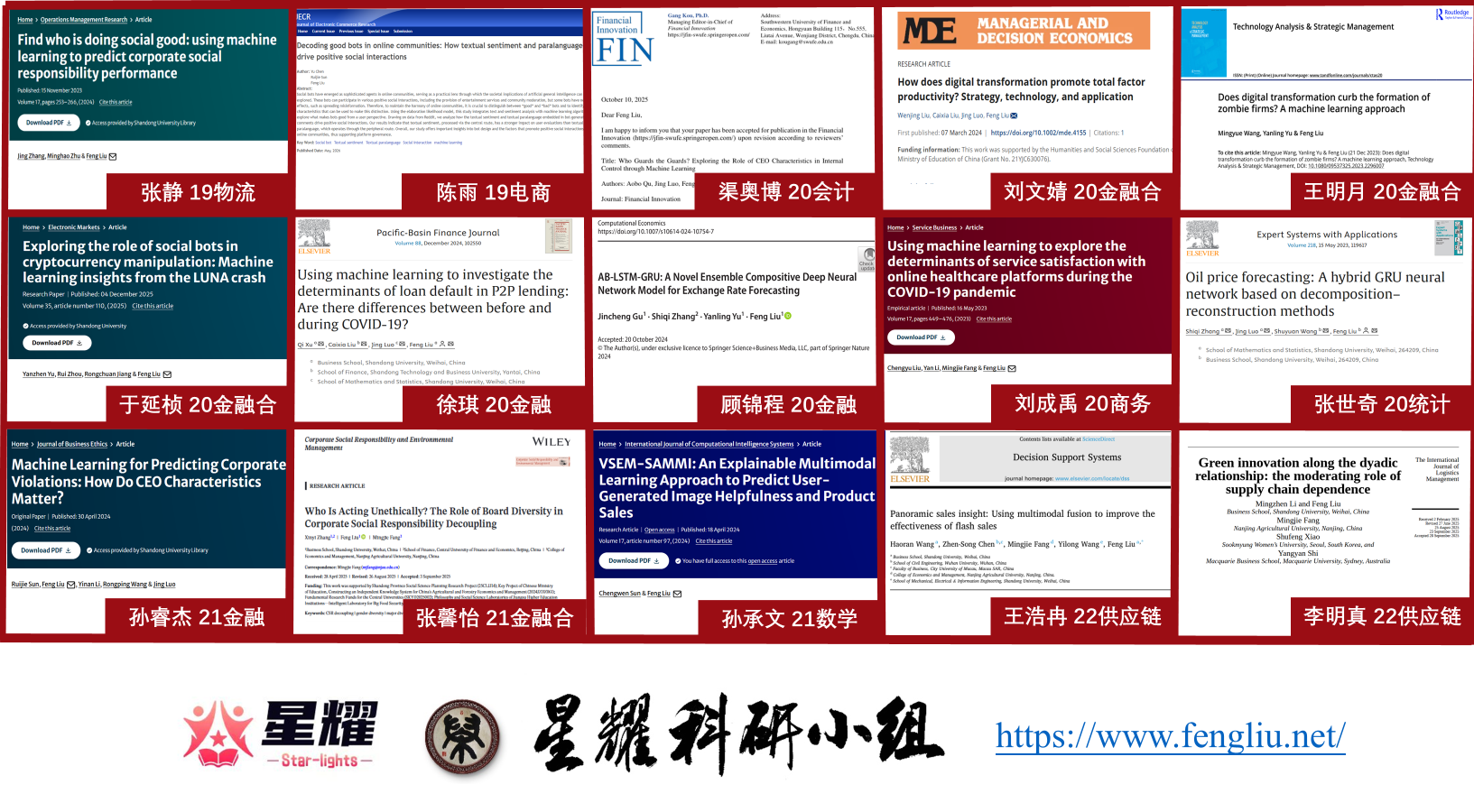
    创建并负责“星耀科研小组”,面向本科生开展系统化科研训练,指导本科生以第一作者身份发表SCI/SSCI高水平期刊论文15篇。注重将人工智能技术训练、管理问题发现与学术规范教育相结合,通过项目实践与团队协作,培养学生的跨学科研究能力和创新精神。小组成员获批山东大学第二届青年学生基础研究项目培育计划(“青苗”专项)立项。
    招生与研究方向
    团队科研经费充足、研究基础扎实,在代码、数据与研究方法方面具有丰富积累,可为学生提供系统的科研训练与创新支持。欢迎有志于学术研究的同学报考山东大学商学院企业管理学术博士、硕士及工业工程与管理专业硕士。重点招收对“AI+管理”、生成式人工智能、数智化运营与供应链管理、社交媒体管理与数字治理等交叉领域感兴趣的学生。
    联系邮箱:liufeng@sdu.edu.cn

    Section image

    Feng Liu (https://www.fengliu.net/) is an Associate Professor and doctoral supervisor at the Business School, Shandong University, Weihai, China, and Principal Investigator of the Star-lights Research Team. He received his Ph.D. in Business, specializing in Logistics, Service & Operations Management, from Korea University Business School.

    His research focuses on the intersection of AI × Management, integrating management theory with machine learning, deep learning, and multimodal analytics to address complex business problems. His work spans AI-enabled decision support, digital operations and supply chain management, and generative AI and social media management. He examines both how AI can advance management research and how its adoption reshapes organizational practices, business relationships, and digital governance.

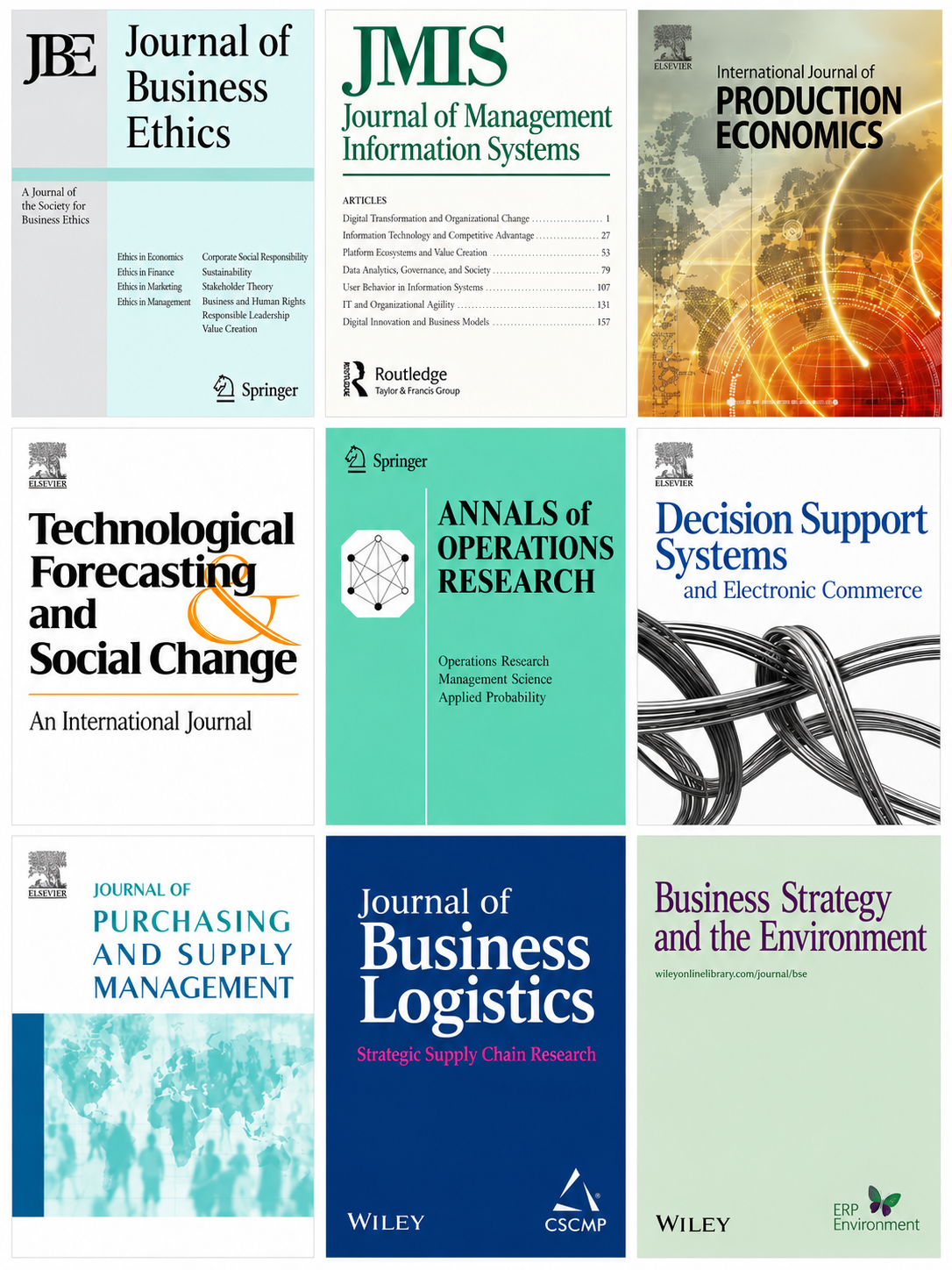
    Dr. Liu serves on the editorial boards of Small Business Economics, Humanities & Social Sciences Communications, and Information Resources Management Journal. His research has appeared in leading journals, including Journal of Management Information Systems, Journal of Business Ethics, International Journal of Production Economics, Decision Support Systems, Technological Forecasting and Social Change, Annals of Operations Research, Journal of Purchasing and Supply Management, Journal of Business Logistics, and Business Strategy and the Environment.

    Foundedand lead Star-lights Research Team providingundergraduate students with systematic training at the intersection of AI × Management. Through project-based learning and collaborative research, I integrate training in AI methods, management research design, and research ethics to develop students’ interdisciplinary research capabilities and academic writing skills. Under my supervision, undergraduate students have published 15 SCI/SSCI-indexed journal articles as first authors.

  • Team Overview 团队介绍

    科研追光,星耀山大!

    Star-lights Research Team |AI × Management

    星耀科研小组|AI × 管理

    星耀科研小组(Star-lights Research Team)由刘锋老师于2021年创建,聚焦“AI × 管理”交叉研究,面向本科生开展系统化科研训练与学术能力培养。小组以真实研究项目为载体,将人工智能方法训练与经济管理问题探索相结合,帮助学生逐步提升问题发现、研究设计、数据分析与学术表达能力,在科研实践中发现兴趣、锤炼本领。

    目前,小组已开展10期科研训练,累计指导本科生以第一作者身份发表SCI/SSCI高水平论文15篇,其中包括FT50期刊论文。小组成员卢灿同学成功获批山东大学第二届青年学生基础研究项目培育计划(“青苗”专项)立项;多位成员获得包括北京大学在内的国内外知名高校深造机会,在持续探索中明确研究志趣、拓展发展空间。

    小组始终秉持“互助共进、薪火相传”的理念,形成导师指导、项目实践与“以老带新”相结合的培养机制。成员在机器学习、深度学习、文本与图像分析、多模态数据融合等方面积累了研究经验,并通过交流协作实现知识传承。我们重视技术能力与理论思考的共同提升,也将学术诚信、研究规范与科学精神贯穿科研训练全过程,鼓励成员勤学善思、求真务实,在互助中成长。

    第11期科研项目即将启动,邀你共同探索三大前沿方向:

    • 社交媒体:解码商业、金融与社会变革
    • 生成式人工智能:从内容生成到管理创新
    • AI智能体与社交机器人:探索人机共生的未来
    我们诚挚欢迎对学术研究充满好奇,愿意持续学习、认真思考,并具备诚实守信、坚持不懈、有始有终、严谨负责与合作精神的本科生加入。
    有意参与的同学,请将个人简历与初步研究想法发送至:liufeng@sdu.edu.cn。
    愿我们并肩探索、互助成长,在认真做研究的过程中锤炼能力、收获友谊,让科研成为一段充实而值得珍藏的青春经历。
    Section image
  • Publication Achievements 期刊成就

    Section image

    FT50

    Journal of Business Ethics

    Journal of Management Information Systems

    ABS3

    International Journal of Production Economics (Twice)

    Technological Forecasting and Social Change (Three times)

    Annals of Operations Research

    Decision Support Systems

    Journal of Purchasing and Supply Management

    Journal of Business Logistics

    Business Strategy and the Environment

  • AI × 管理

    AI × Management

    本系列研究融合管理理论与机器学习、深度学习及多模态分析,围绕企业管理、经济金融与社会治理等议题,探索人工智能赋能管理研究与决策支持的路径。依托星耀科研小组,将前沿研究与本科生科研训练相结合,促进“AI × 管理”交叉融合方向的科研创新与人才培养协同发展推进

    1. Liu, F., Chen, Y., Ho, Y.-C. (Chad), Dasgupta, S., & Fang, M.* (2026). Machine learning analysis of emotional appeals in charity crowdfunding. Journal of Management Information Systems, 43(2), 621–653. DOI: 10.1080/07421222.2026.2647463 (FT50; ABS 4)
    2. Liu, F., Wang, R., & Fang, M.* (2024). Mapping green innovation with machine learning: Evidence from China. Technological Forecasting and Social Change, 200, 123107. DOI: 10.1016/j.techfore.2023.123107 (ABS 3, ESI Highly Cited Paper)
    3. Liu, F., Huang, W., Zhang, J., & Fang, M.* (2024). Corporate social responsibility in family business: Using machine learning to uncover who is doing good. Technology in Society, 76, 102453. DOI: 10.1016/j.techsoc.2024.102453
    4. Liu, F., Long, X., Dong, L., & Fang, M.* (2023). What makes you entrepreneurial? Using machine learning to investigate the determinants of entrepreneurship in China. China Economic Review, 81, 102029. DOI: 10.1016/j.chieco.2023.102029
    5. Sun, R., Liu, F.*, Li, Y., Wang, R., & Luo, J. (2024). Machine learning for predicting corporate violations: How do CEO characteristics matter? Journal of Business Ethics, 195(1), 151–166. DOI: 10.1007/s10551-024-05685-0 (FT50 at publication; ABS 3)
    6. Wang, H., Chen, Z.-S., Fang, M., Wang, Y., & Liu, F.* (2025). Panoramic sales insight: Using multimodal fusion to improve the effectiveness of flash sales. Decision Support Systems, 190, 114401. DOI: 10.1016/j.dss.2025.114401 (ABS 3)
    7. Xu, Q., Liu, C., Luo, J., & Liu, F. (2024). Using machine learning to investigate the determinants of loan default in P2P lending: Are there differences between before and during COVID-19? Pacific-Basin Finance Journal, 88, 102550. DOI: 10.1016/j.pacfin.2024.102550
    8. Sun, C., & Liu, F.* (2024). VSEM-SAMMI: An explainable multimodal learning approach to predict user-generated image helpfulness and product sales. International Journal of Computational Intelligence Systems, 17, 97. DOI: 10.1007/s44196-024-00495-8
    9. Gu, J., Zhang, S., Yu, Y., & Liu, F.* (2025). AB-LSTM-GRU: A novel ensemble composite deep neural network model for exchange rate forecasting. Computational Economics, 66, 1767–1791. DOI: 10.1007/s10614-024-10754-7
    10. Liu, C., Chen, X., Wang, Y., Xiao, S., Liu, C., & Liu, F.* (2025). Exploring the determinants of systematic risk through machine learning: Evidence from Chinese listed companies. Applied Economics, 57(59), 10454–10468. DOI: 10.1080/00036846.2024.2431170
    11. Zhang, J., Zhu, M., & Liu, F.* (2024). Find who is doing social good: Using machine learning to predict corporate social responsibility performance. Operations Management Research, 17, 253–266. DOI: 10.1007/s12063-023-00427-3
    12. Liu, W., Liu, C., Luo, J., & Liu, F.* (2024). How does digital transformation promote total factor productivity? Strategy, technology, and application. Managerial and Decision Economics, 45(5), 2739–2750. DOI: 10.1002/mde.4155 (Top Viewed Article)
    13. Zhang, S., Luo, J., Wang, S., & Liu, F.* (2023). Oil price forecasting: A hybrid GRU neural network based on decomposition–reconstruction methods. Expert Systems with Applications, 218, 119617. DOI: 10.1016/j.eswa.2023.119617 (ESI Highly Cited Paper)
    14. Wang, M., Yu, Y., & Liu, F.* (2025). Does digital transformation curb the formation of zombie firms? A machine learning approach. Technology Analysis & Strategic Management, 37(7), 810–826. DOI: 10.1080/09537325.2023.2296007
    15. Liu, C., Li, Y., Fang, M., & Liu, F.* (2023). Using machine learning to explore the determinants of service satisfaction with online healthcare platforms during the COVID-19 pandemic. Service Business, 17, 449–476. DOI: 10.1007/s11628-023-00535-x
    16. Liu, C., Chen, Y., Huang, S., Chen, X., & Liu, F.* (2023). Assessing the determinants of corporate risk-taking using machine learning algorithms. Systems, 11(5), 263. DOI: 10.3390/systems11050263
    17. Yu, Y., Zhou, R., Jiang, R., & Liu, F.* (2025). Exploring the role of social bots in cryptocurrency manipulation: Machine learning insights from the LUNA crash. Electronic Markets, 35, 110. DOI: 10.1007/s12525-025-00849-w
    18. Chen, Y., Sun, R., & Liu, F.* (2026). Decoding good bots in online communities: How textual sentiment and paralanguage drive positive social interactions. Journal of Electronic Commerce Research, 27(2), 120–141. Full text
    19. Qu, A., Luo, J., & Liu, F.* (2025). Who guards the guards? Exploring the role of CEO characteristics in internal control through machine learning. Financial Innovation. Forthcoming.

    数智化运营与供应链管理

    Digital and Intelligent Operations and Supply Chain Management

    本系列研究围绕供应链集中度与透明度、数字化转型、供应链金融及可持续运营等议题,探讨数智技术与供应链关系如何影响企业管理,为高质量的供应链管理与运营管理提供理论依据和决策支持。

    1. Liu, F., Chen, Z., Fang, M., Xiao, S.*, & Shi, Y. (2024). Legitimacy and transparency in dyadic supply chains: Does competition intensity matter? International Journal of Production Economics, 277, 109397. DOI: 10.1016/j.ijpe.2024.109397 (ABS 3)
    2. Liu, F., Liu, C., Wang, X., Park, K., & Fang, M.* (2024). Keep concentrated and carry on: Redesigning supply chain concentration in the face of COVID-19. International Journal of Logistics Research and Applications, 27(10), 1681–1704. DOI: 10.1080/13675567.2023.2175803
    3. Liu, F., Fang, M., Xiao, S. S.*, & Shi, Y. (2025). Mitigating bullwhip effect in supply chains by engaging in digital transformation: The moderating role of customer concentration. Annals of Operations Research, 344, 825–846. DOI: 10.1007/s10479-024-05908-7 (ABS 3)
    4. Liu, F., Yu, Y., Fang, Y., Zhu, M., Shi, Y., & Xiao, S. S. (2024). Lean strategy in SMEs: Inventory leanness, operational leanness, and financial performance. The Asian Journal of Shipping and Logistics, 40(2), 109–117. DOI: 10.1016/j.ajsl.2024.02.003
    5. Liu, F., Wang, Q., Zhang, Z., Fang, M., & Xiao, S. S.* (2023). Lean inventory, fintech and financing: Interactive influences on Chinese SMEs. Management Decision, 61(8), 2302–2321. DOI: 10.1108/MD-06-2022-0878
    6. Liu, F., Kim, B. C.*, & Park, K. (2022). Supplier-base concentration as a moderating variable in the non-linear relationship between R&D and firm value. Asian Journal of Technology Innovation, 30(2), 342–363. DOI: 10.1080/19761597.2020.1853576
    7. Liu, F., Rhim, H., Park, K., Xu, J., & Lo, C. K.* (2021). HACCP certification in food industry: Trade-offs in product safety and firm performance. International Journal of Production Economics, 231, 107838. DOI: 10.1016/j.ijpe.2020.107838 (ABS 3)
    8. Liu, F., & Park, K.* (2021). Managing firm risk through supply chain dependence: An SME perspective. Journal of Business & Industrial Marketing, 36(12), 2231–2242. DOI: 10.1108/JBIM-05-2019-0229
    9. Liu, F., Fang, M., Park, K., & Chen, X.* (2021). Supply chain finance, performance, and risk: How do SMEs adjust their buyer-supplier relationship for competitiveness? Journal of Competitiveness, 13(4), 78–95. DOI: 10.7441/joc.2021.04.05
    10. Chen, X., Liu, C., Liu, F.*, & Fang, M. (2021). Firm sustainable growth during the COVID-19 pandemic: The role of customer concentration. Emerging Markets Finance and Trade, 57(6), 1566–1577. DOI: 10.1080/1540496X.2021.1904884
    11. Zhang, Z., Shen, J., Liu, F.*, Liu, Z., & Treepongkaruna, S. (2026). Closer and greener: The interplay of buyer environmental investments, supplier emissions, and supplier environmental practices. Business Strategy and the Environment. Advance online publication. DOI: 10.1002/bse.71155 (ABS 3)
    12. Fang, M., Liu, F., Xiao, S., & Park, K.* (2023). Hedging the bet on digital transformation in strategic supply chain management: A theoretical integration and an empirical test. International Journal of Physical Distribution & Logistics Management, 53(4), 512–531. DOI: 10.1108/IJPDLM-12-2021-0545
    13. Fang, M., Liu, F., & Park, K.* (2024). Is inventory performance helping to improve SME credit ratings? The moderating role of supply chain concentration. Applied Economics Letters, 31(10), 880–884. DOI: 10.1080/13504851.2022.2156455
    14. Fang, M., Yu, Y., Park, K., Liu, F., Xiao, S. S.*, & Shi, Y. (2024). Supply chain relationship dependencies and circular economy performance: The contingency role of digitalization capability. Journal of Purchasing and Supply Management, 30(4), 100902. DOI: 10.1016/j.pursup.2024.100902 (ABS 3)
    15. Fang, M., Liu, F., Xiao, S.*, Park, K., & Gao, Y. (2025). Navigating ethical dilemmas in supply chain finance: The interplay between digitalization and cultural congruence. Journal of Business Logistics, 46(3), e70027. DOI: 10.1111/jbl.70027 (ABS 3)
    16. Zhang, X., Liu, F., & Fang, M.* (2026). Who is acting unethically? The role of board diversity in corporate social responsibility decoupling. Corporate Social Responsibility and Environmental Management, 33(1), 169–188. DOI: 10.1002/csr.70174
    17. Li, M., Liu, F., Fang, M., Xiao, S., & Shi, Y.* (2026). Green innovation along the dyadic relationship: The moderating role of supply chain dependence. The International Journal of Logistics Management, 37(2), 340–367. DOI: 10.1108/IJLM-02-2025-0068

    技术创新、创业与中小企业发展

    Technological Innovation, Entrepreneurship, and SME Development

    本系列研究围绕技术采纳、知识吸收、绿色创新与创业网络等议题,探讨技术应用与创新活动如何影响消费者行为、企业竞争优势及创业企业成长,为中小企业高质量发展提供理论依据和管理启示。

    1. Liu, F., Dutta, D. K.*, & Park, K. (2021). From external knowledge to competitive advantage: Absorptive capacity, firm performance, and the mediating role of labour productivity. Technology Analysis & Strategic Management, 33(1), 18–30. DOI: 10.1080/09537325.2020.1787373
    2. Cao, J., Liu, F.*, Shang, M., & Zhou, X. (2021). Toward street vending in post COVID-19 China: Social networking services information overload and switching intention. Technology in Society, 66, 101669. DOI: 10.1016/j.techsoc.2021.101669
    3. Xu, J., Liu, F.*, & Shang, Y. (2021). R&D investment, ESG performance and green innovation performance: Evidence from China. Kybernetes, 50(3), 737–756. DOI: 10.1108/K-12-2019-0793 (ESI Highly Cited Paper)
    4. Wang, X., Wong, Y. D., Liu, F., & Yuen, K. F. (2023). Consumers’ paradoxical motives of co-creation: From self-service technology to crowd-sourcing platform. Technological Forecasting and Social Change, 197, 122934. DOI: 10.1016/j.techfore.2023.122934 (ABS 3)
    5. Wang, X., Wong, Y. D., Liu, F., & Yuen, K. F.* (2021). A push–pull–mooring view on technology-dependent shopping under social distancing: When technology needs meet health concerns. Technological Forecasting and Social Change, 173, 121109. DOI: 10.1016/j.techfore.2021.121109 (ABS 3)
    6. Yu, W., Dai, S.*, Liu, F., & Yang, Y. (2023). Matching disruptive innovation paths with entrepreneurial networks: A new perspective on startups’ growth with Chinese evidence. Asian Business & Management, 22(3), 878–902. DOI: 10.1057/s41291-022-00177-3
    7. 余维臻, 陈立峰, & 刘锋. (2021). 后发情境下创业企业如何成为“独角兽”——颠覆性创新视角的探索性案例研究. 科学学研究 (CSSCI), 39(7), 1267–1276. DOI: 10.16192/j.cnki.1003-2053.20200924.006 · 期刊页面
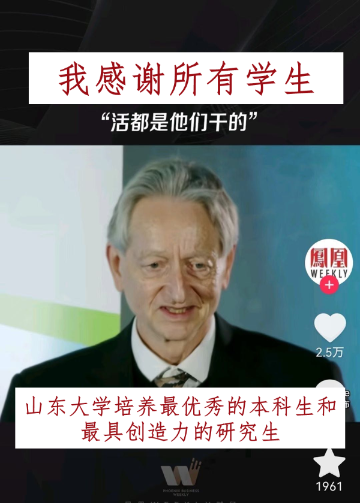
  • 感谢所有的合作者、所有的学生们!

    Research is a lot like love,

    and the commitment to be a researcher is a lot like saying “I do”.
    Section image